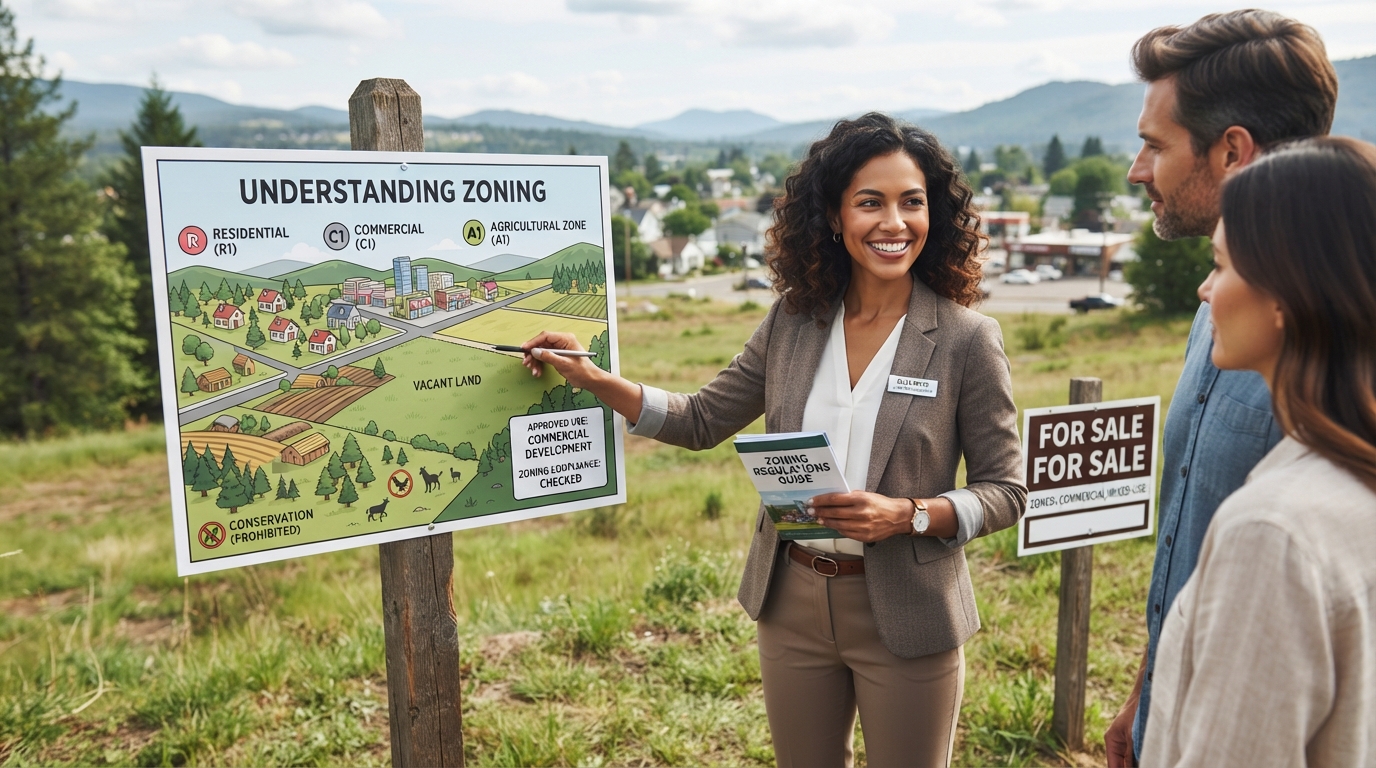
Understanding Zoning: Why It Matters When Selling Vacant Land
When selling vacant land, many property owners focus primarily on location, size, and price. While these factors are certainly important, one critical element often has an even greater influence on a property's marketability and value: zoning.
Understanding how your land is zoned can help you price it more accurately, attract the right buyers, avoid delays during the sales process, and maximize your property's potential. Whether you're selling a small residential lot or a larger parcel of undeveloped land, zoning plays a significant role in determining what buyers can—and cannot—do with your property.
What Is Zoning?
Zoning refers to the regulations established by local municipalities that determine how land can be used. These regulations help organize communities by separating different types of development while protecting public safety, infrastructure, and property values.
Every parcel of land is assigned a zoning designation that outlines its permitted uses and any restrictions that apply.
Common zoning categories include:
Residential
Commercial
Industrial
Agricultural
Mixed-Use
Institutional
Open Space or Conservation
Each municipality establishes its own zoning bylaws, meaning the same zoning designation may have different requirements depending on the location.
Why Buyers Care About Zoning
One of the first questions experienced land buyers ask is:
"What is the property zoned for?"
The answer helps determine whether the property fits their intended use.
For example:
A custom home builder wants land zoned for residential construction.
A commercial developer needs commercial zoning.
An investor may be looking for land with future rezoning potential.
A farmer may require agricultural zoning.
If the zoning doesn't match a buyer's objectives, the property may not be suitable regardless of its size or location.
Zoning Directly Affects Property Value
Two vacant parcels of similar size located next to each other can have dramatically different values simply because of their zoning.
Factors that influence value include:
Permitted land uses
Density allowances
Minimum lot sizes
Building height restrictions
Setback requirements
Environmental limitations
Future development opportunities
Land that allows multiple residential units or commercial development often carries a higher market value than land restricted to limited uses.
Understanding these differences helps sellers establish realistic pricing and market the property's strongest features.
Residential Zoning Is Not Always the Same
Many sellers assume "residential" means any type of home can be built.
In reality, residential zoning often includes numerous classifications that regulate:
Single-family homes
Semi-detached homes
Townhomes
Multi-unit developments
Secondary dwelling units
Minimum lot frontage
Maximum building coverage
Building height
These details can significantly influence which builders or buyers may be interested in your property.
Can Zoning Be Changed?
In some cases, yes.
Municipalities may approve zoning amendments or rezoning applications when they align with long-term planning objectives.
However, rezoning is never guaranteed. The process may involve:
Planning studies
Public consultation
Municipal review
Environmental considerations
Council approval
Because rezoning can take considerable time and involve additional costs, many buyers place greater value on land that already has the zoning they require.
Don't Assume Future Development Means Automatic Rezoning
It's common for sellers to believe nearby development guarantees their land can also be rezoned.
While surrounding growth may increase future potential, municipalities evaluate each property individually. Rezoning decisions often consider:
Existing infrastructure
Road capacity
Water and sewer availability
Environmental protection
Community planning objectives
Official land use plans
Future potential can certainly add value, but buyers generally evaluate what is currently permitted before considering future possibilities.
How Zoning Influences Marketing
Knowing your property's zoning allows you to market it to the right audience. For example:
Residential lots may appeal to:
Custom home builders
Individual homebuyers
Small developers
Commercial land may attract:
Business owners
Retail developers
Investment groups
Agricultural land may interest:
Farmers
Agricultural investors
Rural land buyers
Targeting the appropriate buyers often results in stronger interest and a more efficient sales process.
Buyers Will Verify Zoning
Even if a seller believes they know how the land can be used, serious buyers will usually verify zoning through the municipality during their due diligence.
Providing accurate information from the beginning helps build confidence and reduces the likelihood of misunderstandings later in the transaction.
Whenever possible, sellers should avoid making assumptions about permitted uses and instead rely on official municipal information.
Zoning Is Only One Piece of the Picture
Although zoning is extremely important, buyers typically evaluate several additional factors before purchasing vacant land, including:
Property size
Road access
Topography
Utilities
Environmental constraints
Servicing availability
Property taxes
Development costs
Market conditions
Looking at the complete picture allows buyers to determine whether a property fits both their development plans and investment goals.
How PLC Property Group Helps
At PLC Property Group, we understand that zoning can seem complicated for many landowners. Our team works with property owners to evaluate their vacant land, understand how zoning may influence buyer interest, and connect properties with qualified purchasers seeking development opportunities.
Whether your property is ready for immediate development or offers future potential, understanding its zoning can make a meaningful difference in creating a successful sale.
Final Thoughts
Zoning is one of the most important factors affecting vacant land sales. It influences who may be interested in your property, how it can be developed, its market value, and ultimately how attractive it is to potential buyers.
Before listing your vacant land, take the time to understand its current zoning and any applicable municipal regulations. Having accurate information helps position your property more effectively and provides buyers with the confidence they need to move forward.
If you're considering selling vacant land and would like to better understand how your property's zoning may affect its value and marketability, PLC Property Group is here to help guide you through the process and connect you with serious land buyers.