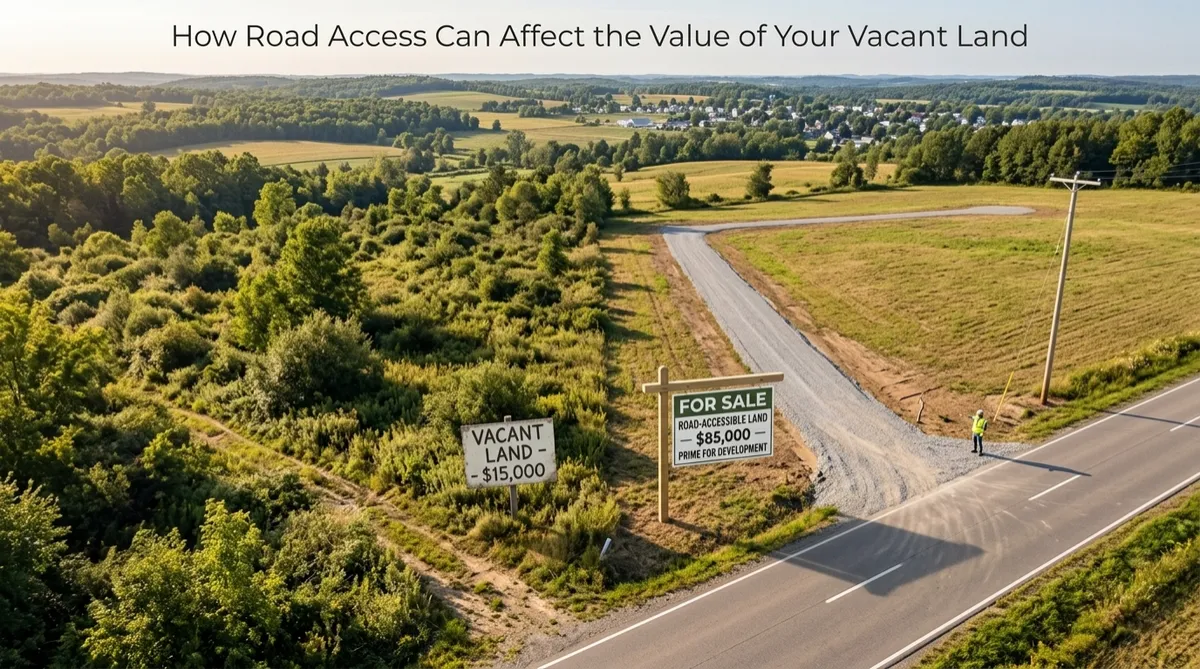
How Road Access Can Affect the Value of Your Vacant Land
When you're selling vacant land, buyers look at much more than acreage and location. One of the first practical questions they may ask is how they can legally and physically get to the property.
Road access can significantly influence how buyers view vacant land. A property with clear, reliable access may be easier to evaluate, develop, and use, while uncertainty about access can create questions that affect buyer interest and the value they place on the property.
Understanding your property's access before you sell can help you answer buyer questions and prepare for a smoother transaction.
Why Road Access Matters
Vacant land is different from a home or commercial building because the property itself may not have an obvious entrance. Buyers need to know how people, vehicles, equipment, and future construction crews can reach the parcel.
Access can affect a property's usefulness, development potential, and marketability. Even a well-located parcel may attract less interest if buyers are uncertain about whether they can legally reach it.
For this reason, access is often an important part of a buyer's due diligence.
Legal Access vs. Physical Access
It's important to understand that having a road nearby does not necessarily mean a property has legal access.
Physical access refers to whether someone can actually reach the property. Legal access concerns whether the property owner has a recognized right to use the road or route.
Some properties have direct access from a public road. Others rely on an easement or right-of-way across another parcel. These are different considerations, and buyers may want documentation supporting the property's access rights.
What Buyers May Want to Know
A prospective buyer may ask:
Is the property directly accessible from a public road?
Is the road paved, gravel, or unimproved?
Is the road publicly maintained?
Is there a recorded easement?
Who has the right to use the access route?
Are there seasonal or weather-related access concerns?
Can standard vehicles or construction equipment reach the property?
You may not have answers to every question, but knowing what information is available can make conversations with buyers much easier.
Easements and Rights-of-Way
If your property depends on an easement or right-of-way, it's worthwhile to locate any documentation you have.
An easement may establish a legal right to cross another property for access, but the exact terms can vary. The location, permitted use, maintenance responsibilities, and other conditions may all matter.
If you are unsure about an easement, avoid making assumptions. Buyers will typically conduct their own due diligence, and providing the information you have allows them to investigate the issue properly.
Road Conditions Can Also Matter
Legal access is important, but the physical condition of the route can also influence buyer interest.
A parcel may technically have access but still be difficult to reach. Narrow roads, steep terrain, seasonal conditions, or poorly maintained routes can create additional considerations for buyers.
For some buyers, these challenges may be manageable. For others, they may affect the property's suitability for their plans.
The key is to understand the characteristics of the access rather than assuming that all road access has the same value.
How Access Can Influence Land Value
There is no single dollar amount that can be assigned to road access. Its effect depends on the property, location, intended use, surrounding development, and buyer demand.
Clear and practical access can make a parcel more attractive because it reduces uncertainty. Questions surrounding access can make buyers more cautious and may affect how they evaluate the property.
This is one reason that comparing vacant land based solely on acreage or nearby sale prices can be misleading. Two parcels with similar sizes may have very different characteristics.
What Sellers Can Do Before Listing
Before putting your property on the market, consider gathering:
The property's parcel identification information.
Any survey you have available.
Recorded easement or right-of-way documents.
Information about the road serving the property.
Details about road maintenance, if known.
Maps or other information showing the access route.
You don't necessarily need to resolve every possible question before selling. However, knowing what information you have can help you communicate clearly with prospective buyers.
PLC Property Group Insight
At PLC Property Group, we understand that every vacant land property is different. Access is one of the details we consider when evaluating a property because it can influence how buyers view the opportunity.
If you're unsure about your property's access, that doesn't necessarily mean you can't sell. The important thing is to understand what is known, identify what may need to be verified, and provide accurate information during the selling process.
Key Takeaways
Road access can influence the marketability and potential value of vacant land.
Legal access and physical access are not necessarily the same thing.
Easements and rights-of-way can be important when a property does not have direct public-road access.
Road conditions may affect how practical a property is for certain buyers.
Gathering access information before selling can help reduce uncertainty and make buyer conversations easier.
Frequently Asked Questions
Do I need direct access from a public road to sell my land?
Not necessarily. Some properties are accessed through recorded easements or rights-of-way. The specific circumstances of the property will determine what buyers need to verify.
What if I don't know whether my property has legal access?
You can begin by reviewing your property records and any available survey or deed information. A buyer will typically conduct their own due diligence as well.
Does an unpaved road reduce land value?
Not automatically. The effect depends on the property's location, intended use, buyer expectations, and the condition and reliability of the road.
Can PLC Property Group buy land with access issues?
Every property is evaluated individually. If you're concerned about access or another characteristic of your vacant land, PLC Property Group can discuss the property with you and help you understand your options.
Thinking About Selling Your Vacant Land?
Road access is just one of the factors buyers consider when evaluating vacant land, but understanding it before you sell can help you approach the process with greater confidence.
If you're considering selling your vacant land and have questions about access, value, or the selling process, PLC Property Group is available to discuss your property and help you understand your options.
You don't have to have every answer before starting the conversation. The first step is simply understanding what you own and what opportunities may be available.